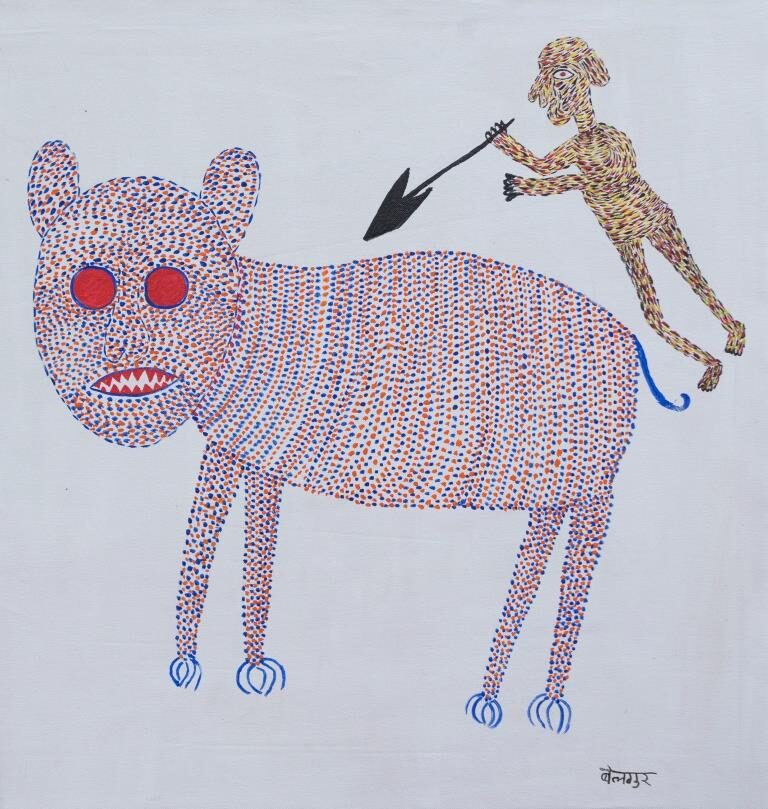
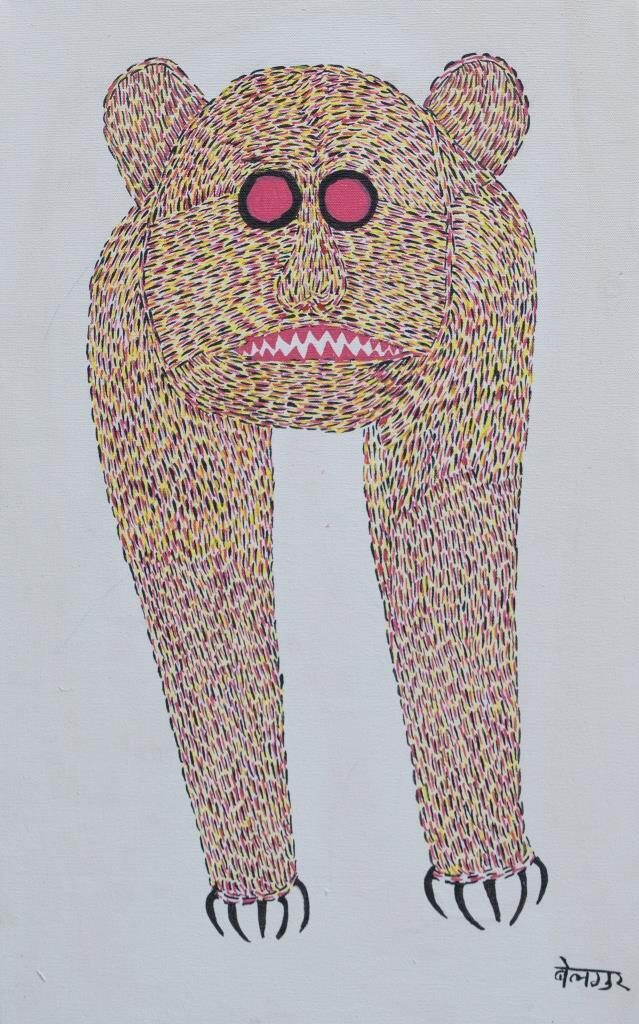
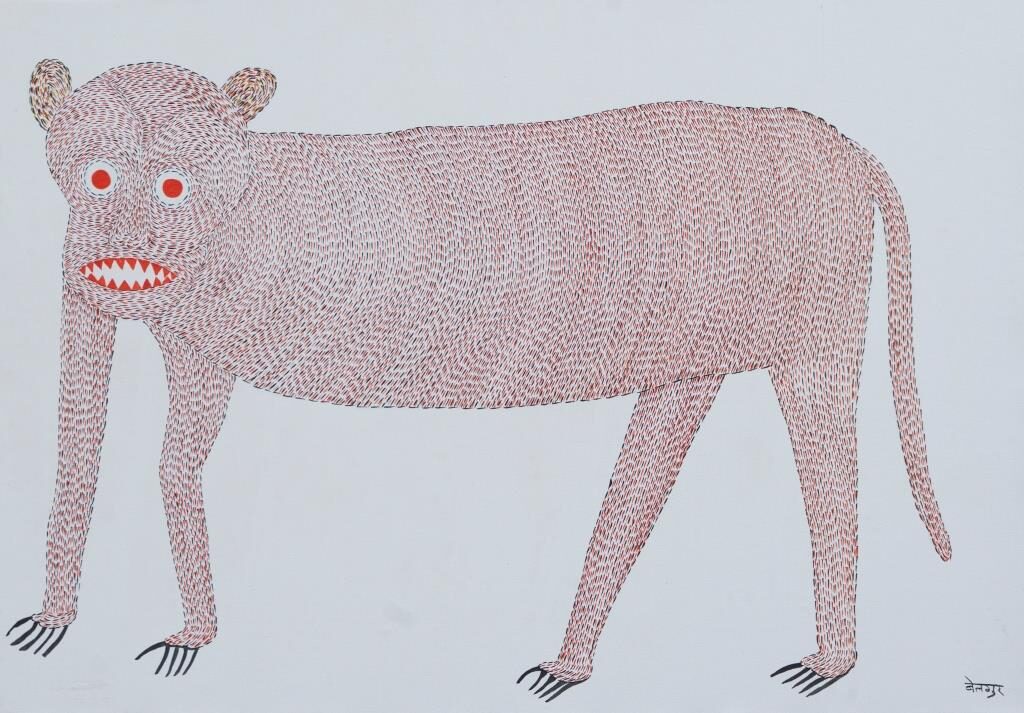
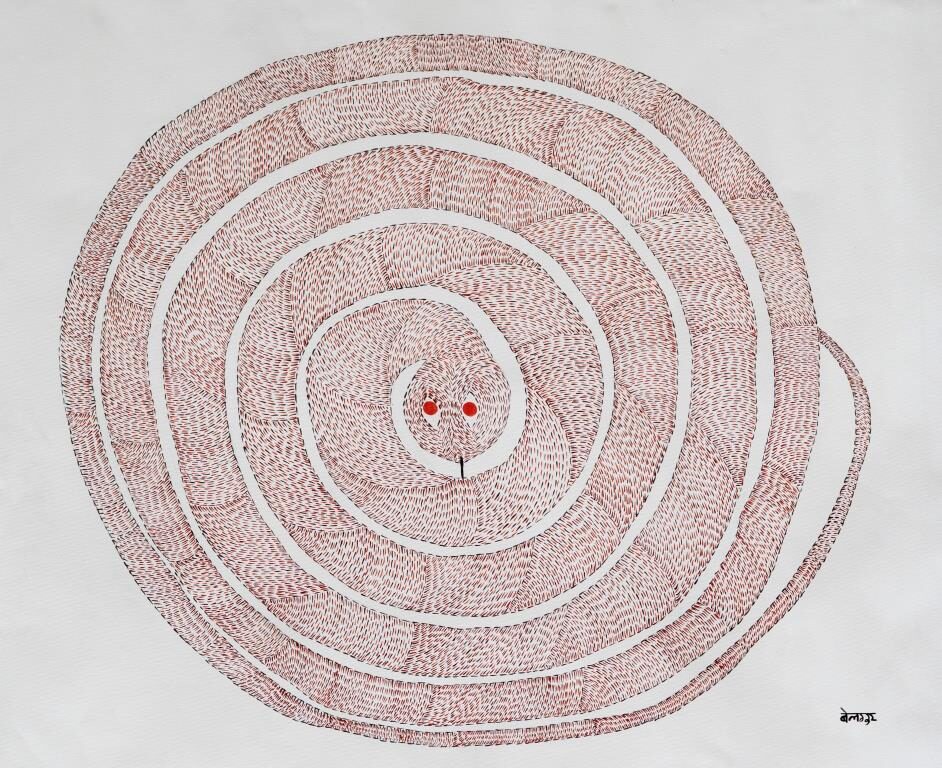
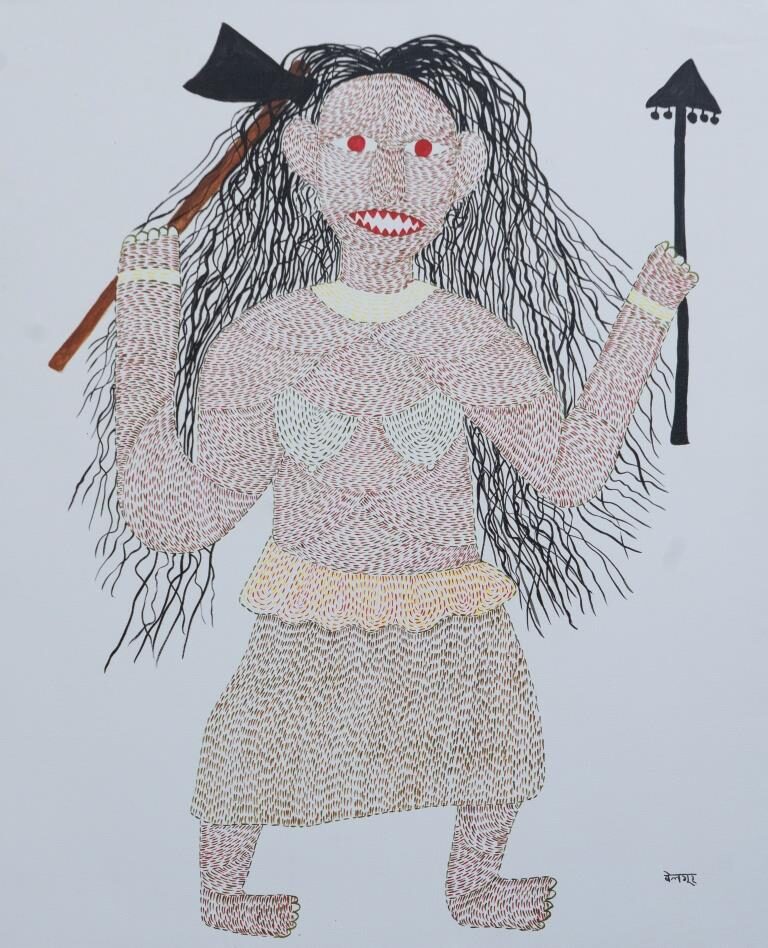
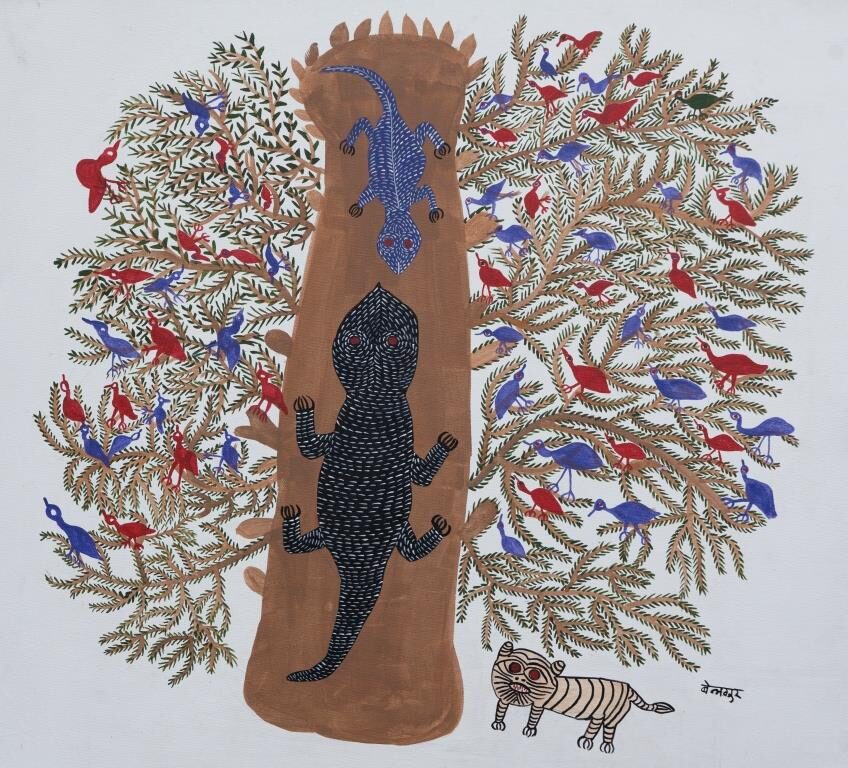
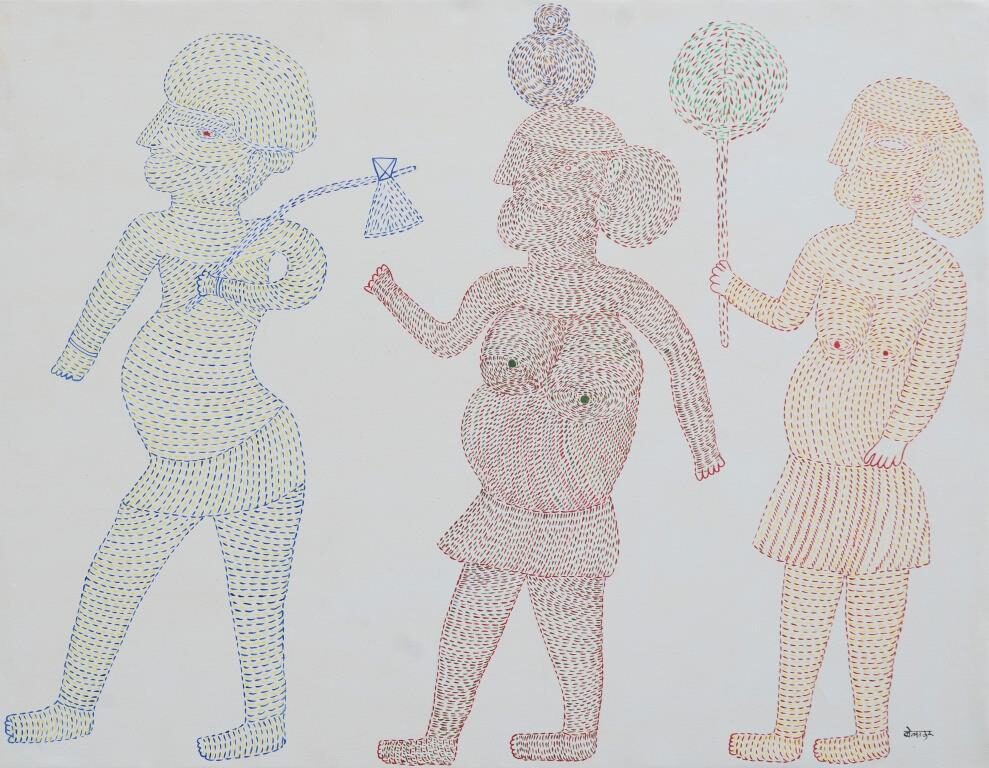
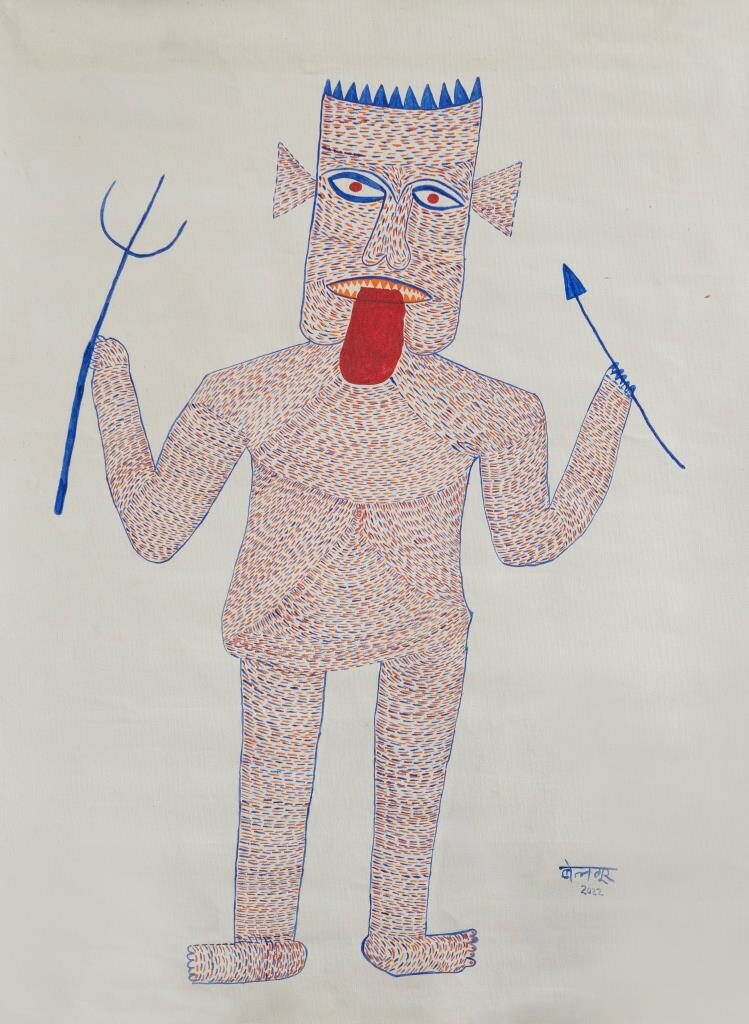
Belgur Mandavi (1962–2025; Garhbengal, Bastar, Chhattisgarh) was among the early practitioners from the Muria community whose practice played an important role in bringing indigenous artistic traditions into the discourse of contemporary Indian art. Emerging in the early 1980s, he was among the first artists from the Muria community to translate customary ritual and wall-painting traditions onto paper, developing a distinctive visual language rooted in the cultural life of Bastar.
Mandavi’s artistic journey was closely associated with Bharat Bhavan, Bhopal, particularly the Roopankar Museum of Fine Arts, which played an important role in introducing artists from indigenous communities to national audiences. Through artist camps, workshops, and exhibitions organised by Bharat Bhavan, his work gained wider recognition and became part of important initiatives that expanded the visibility of indigenous artistic practices within India.
His paintings depicted scenes from Muria life, community gatherings, dance, music, and symbolic motifs, offering intimate narratives of the region’s cultural and ecological heritage. Mandavi participated in several group exhibitions and artist camps dedicated to indigenous artistic practices, contributing to the recognition of Muria visual traditions within contemporary exhibition contexts.
Over the decades, his works were featured in publications and exhibition catalogues documenting the development of indigenous artistic practices in India, particularly those emerging from Bharat Bhavan’s pioneering programmes. Today, Belgur Mandavi’s oeuvre stands as an important testament to the evolving legacy of Muria artistic traditions and their continued relevance within contemporary Indian art.